Showing posts with label Introductory Hypnosis. Show all posts

Watch as BBC investigates hypnosis and hypnotherapy, and provides a scientific take on it.

The videos come in six parts. Please watch the following videos in its entirety. We think it is well worth it.

A Look at Stage Hypnosis


For the rest in the series, please watch on YouTube.

Hypnosis to Quit Smoking and to Lose Weight?
http://www.youtube.com/watch?v=1ieEyD_fcuU


Hypnotic Suggestions and the Brain's Response
http://www.youtube.com/watch?v=48hDDAFsR-4

Use of Hypnosis in Medicine
http://www.youtube.com/watch?v=UGcutHn2Ir4

Hypnosis and Pain
http://www.youtube.com/watch?v=rpMpnOfBZ-0


Hypnosis Process is Not the Placebo Effect!
http://www.youtube.com/watch?v=bJ2iPOr13QM


***********************************************
The information contained on this blog is provided for one's general interest and knowledge only, and it does not constitute as therapy. Those seeking professional attention on specific issues are advised to contact us directly. My team and I are based in Singapore and offer one-on-one hypnotherapy, counseling and coaching sessions. We can be contacted by email at info[at]petrahypnosis.com. You may also call us at 6-250-6166 or 9-1000-432.

Understanding and Managing Emotions Through Hypnosis
Written by Fauziah Shah, MA, HBCE, BCH, CI, CPHI

Emotions and Feelings

Emotions are strong feelings of any kind, for example anger, happiness, sadness, fear or guilt. An emotion is a mental state that arises spontaneously rather than through conscious effort. Many great classical philosophers like Plato, Aristotle, Descartes and Hobbes had theorised about emotions. Surprisingly, twentieth century mind philosophers and psychologists had neglected them. In recent years however, emotions have once again become the focus of vigorous interest in philosophy, as well as other branches of cognitive science and in hypnotherapy. A particular emotion can give rise to feelings, which are the sentiments felt by a person, leading to physiological changes, such as an increase in pulse rate, rise in body temperature or change in the rate of breathing.

How Emotions affect our Life

Emotions are what drive people to react in a certain way. For example, when a person receives good news, the response is: “Wow! Life is great!” And bad news may generate a negative response: “Life stinks!” Our experience of life is based on our interpretation of each event. Our interpretation of each event depends entirely on the emotions that we attach to the event. How we feel about each situation, determines our experience of, and our reaction to, the event. A person’s view of life may change from day to day and from moment to moment, depending on how he or she interprets the event or events in his or her life.

Understanding Emotions- the key to managing them

Our emotions affect our thought processes and attitude. For example, people can get upset when things go wrong, like when there is a slip up at work, when things are not done on time, when they cannot meet deadlines or when they are overworked. As their emotions take a turn towards unhappiness, their attitude also swings in the same downward direction, becoming prone to more negative thoughts. This soon starts affecting every aspect of their lives. This demonstrates how important it is to understand our emotions and why we feel a particular way. The more we understand our emotions, the better we’ll be in trying to manage them so that they do not adversely affect our performance, both in social and business situations.

Albert Schweitzer (Jan 14 1875 to Sept 4 1965), a German philosopher, physician, humanitarian and theologian who was awarded the Nobel Peace Prize in 1952, once said: Managers and employers alike need to realize that when making decisions, they are in a state that is driven partly by reason, but also partly by emotion.” So, if we are not aware of our emotions and do not understand what caused them, they can be a problem in our work place. Such unattributed emotions can create havoc, particularly for people working in high-stress, fast-paced jobs, like judges and parole officers, who have to make quick judgements of people. Because they move from one incident to the next without the luxury of time to sit back and gauge their emotions, they are more likely to misattribute emotional states.

How Hypnotherapy and Self Hypnosis can Help?

The way to get permanent change is to ensure that our beliefs and resolutions reside in the subconscious mind. If we use our conscious mind to decide what to do, it rarely works out as our deep seated emotions, thoughts and feelings reside in our subconscious. That is why using hypnosis works as it deals mainly with the subconscious mind. When we understand how emotions affect us subconsciously and if we learn to re-program our minds so that we become more aware of our emotional state, then such an emotional state will not bleed into our judgements of others or cloud our perceptions. Learning self hypnosis will also help us visualise happy things so that we can literally feel happier despite facing setbacks.

What is Hypnosis?

Hypnosis is actually an altered and heightened state of consciousness which we can naturally enter so that, for therapeutic purposes, beneficial suggestions may directly be given to our subconscious mind. In this way, hypnosis is an effective way of making contact with our inner (subconscious) self, which is both a reservoir of unrecognized potential and knowledge as well as being the unwilling source of many of our problems.

Examples of alterations in consciousness occur frequently and most people experience some of them. Both children and adults can become so absorbed in daydreaming that they lose track of what is going on around them. Some people consciously use daydreams to divert themselves from certain aspects of their existence. When someone is concentrating on a work project, the hyper-focusing that aids the work may also shut out noises and other distractions. Someone who is absorbed in an activity may, when the activity ends, need to take a moment to reorient to the external world.

Contrary to some people’s fears, no one can be hypnotized against their will and even when hypnotized, a person can still reject any suggestion. Thus therapeutic hypnosis is a state of purposeful co-operation.

How Hypnosis really works?

There is another part of the mind that rejects any new information if it is inconsistent with what is already in the Subconscious Mind. Hypnotists and Hypnotherapists call this the Critical Factor. It is actually a protective mechanism but if a person erroneously believes in something, the Critical Factor will try to protect the person from anything that tries to defy this belief, so the only way for Hypnosis to work to help a client make the necessary change is to bypass this critical factor.

In hypnosis, when the Critical Factor is bypassed, change can be effectively made in the Subconscious Mind. That is why sometimes hypnosis is defined as the bypass of the Critical Factor to the establishment of acceptable selective thinking. This means that when a person goes through a hypnotic induction, this allows the mind to be more receptive than usual, thus allowing the mind to accept the suggestions that you like. The protective part of the Subconscious Mind will prevent the person from accepting anything that he doesn’t like. That is why it is important for a person to want to make the change for hypnosis to work successfully. The line I use frequently is “If you want it badly enough, you’ll get it!”

About the author:
Fauziah Shah is a Board Certified Hypnotist and Clinical Hypnotherapist. At Petra Hypnosis & Training Centre, they use advanced techniques that help their clients go to the root cause of their emotional problems if necessary so that the old emotions that caused the problems are neutralized and the clients start feeling much better. She can be contacted at 91000432 or 64639500. Alternatively you could write to her at info@petrahypnosis.com For more information, you may visit: http://www.petrahypnosis.com.

***********************************************

The information contained on this blog is provided for one's general interest and knowledge only, and it does not constitute as therapy. Those seeking professional attention on specific issues are advised to contact us directly. My team and I are based in Singapore and offer one-on-one hypnotherapy, counseling and coaching sessions. We can be contacted by email at info[@]petrahypnosis.com. You may also call us at 6-250-6166 or 9-1000-432.

We came across an informative news article on a recent study about the effect of hypnosis on the brain.

We know that hypnosis can be used for overcoming anxiety and addiction. But how does this actually work within the brain?

Well, the results of the study show that hypnosis works by shutting off the part of the brain involved in daydreaming or letting the mind wander - also known as the "default mode" network. This leaves the brain free to concentrate on other tasks, such as to respond more effectively to suggestions. This shows that the changes were due to hypnosis and not just simple relaxation.

The entire news article is reproduced below:

Hypnosis has 'real' brain effect

Hypnosis has a "very real" effect that can be picked up on brain scans, say Hull University researchers.

An imaging study of hypnotised participants showed decreased activity in the parts of the brain linked with daydreaming or letting the mind wander.

The same brain patterns were absent in people who had the tests but who were not susceptible to being hypnotised.

One psychologist said the study backed the theory that hypnosis "primes" the brain to be open to suggestion.

Hypnosis is increasingly being used to help people stop smoking or lose weight and advisers recently recommended its use on the NHS to treat irritable bowel syndrome.

“ This shows that the changes were due to hypnosis and not just simple relaxation ”
Dr William McGeown, study leader.

It is not the first time researchers have tried to use imaging studies to monitor brain activity in people under hypnosis.

But the Hull team said these had been done while people had been asked to carry out tasks, so it was not clear whether the changes in the brain were due to the act of doing the task or an effect of hypnosis.

In the latest study, the team first tested how people responded to hypnosis and selected 10 individuals who were "highly suggestible" and seven people who did not really respond to the technique other than becoming more relaxed.

The participants were asked to do a task under hypnosis, such as listening to non-existent music, but unknown to them the brain activity was being monitored in the rest periods in between tasks, the team reported in the journal Consciousness and Cognition.

Default mode

In the "highly suggestible" group there was decreased activity in the part of the brain involved in daydreaming or letting the mind wander - also known as the "default mode" network.

One suggestion of how hypnosis works, supported by the results, is that shutting off this activity leaves the brain free to concentrate on other tasks.

Study leader Dr William McGeown, a lecturer in the department of psychology, said the results were unequivocal because they only occurred in the highly suggestible subjects.

"This shows that the changes were due to hypnosis and not just simple relaxation. "Our study shows hypnosis is real."

Dr Michael Heap, a clinical forensic psychologist based in Sheffield, said the experiment was unique in showing brain patterns supporting the theory that hypnosis works by "priming" the subject to respond more effectively to suggestions.

"Importantly the data confirm that relaxation is not a critical factor.

"The limited data from this experiment suggest that this pattern of activity then dissipates (at least to some extent) once the subjects start to engage in the suggestions that follow."

But he said the small study, which needed repeating in other populations, did not prove that people being hypnotised were in an actual "trance".

Story from BBC NEWS:
http://news.bbc.co.uk/go/pr/fr/-/2/hi/health/8359170.stm

Published: 2009/11/16 00:19:32 GMT


***********************************************

The information contained on this blog is provided for one's general interest and knowledge only, and it does not constitute as therapy. Those seeking professional attention on specific issues are advised to contact us directly. My team and I are based in Singapore and offer one-on-one hypnotherapy, counseling and coaching sessions. We can be contacted by email at info[at]petrahypnosis.com. You may also call us at 6-250-6166 or 9-1000-432.

Hypnosis teaches you how to take charge of your emotions
and not to let emotions rule you.

By Fauziah Shah

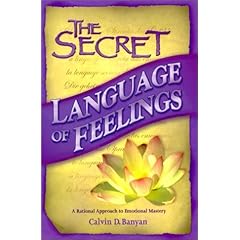
American psychologist and hypnotherapist Calvin Banyan, in his book ‘The Secret Language of Feelings’, has very succinctly elaborated about emotions and how they rule us most of the time. He points out that most of us walk about with lots of suppressed feelings and emotions. Along the way, sometimes we find avenues to release them but in many people, these are just waiting to ‘explode’.

Most human societies frown upon the so-called negative feelings such as anger, so people have been conditioned from young not to display such feelings. This leads to people having a backlog of anger or other negative emotions just waiting to be expressed. All experiences of suppressed anger accumulate and any new experience of a similar nature resonates with the older stored feelings causing people to ‘explode’. This inexplicable anger is what surprises many people.

People who have suppressed anger from young usually have problems with controlling anger in adulthood. However the strange fact is that people who suffer from such anger moods are either unaware of their condition or living in denial. Usually it is family members or well meaning friends who point this out to them. Even then many go through life not knowing how to overcome this problem. Some live in denial by publicly refusing to admit that there is anything to be bothered about and privately doing a mental battle all their lives.

As a 7th Path Self Hypnosis teacher, I conduct 7th Path self hypnosis classes regularly at my centre. I teach my students to understand that all feelings are good, including anger. Although 7th Path is an anti viral programme of the mind which works automatically upon contact with the Recognitions that are given out during the class, most students find that they start looking at things differently. Their perceptions change for the better and they become better able to manage their emotions.

Many adults who have anger issues are those who as children were not allowed to express their anger. Anger has always been seen as something that needs to be fixed, changed, stifled and discouraged. Many children were even punished for expressing anger or related emotions and many have grown up with feelings of inadequacy.

This is the mindset that needs to be changed. 7th Path Self Hypnosis is a mind-body-spirit approach to doing self hypnosis. Although 7th Path is not meant for healing, healing takes place and this is mainly due to the invitation of Delta or the student’s Higher Power to be a part of the process and also due to the clearing of emotional and mental baggage as a result of this practice. Many of my clients also opt to do 7th Path to complement the therapy that they’re doing with me. Many prefer one to one sessions with me while others join my group classes to benefit from the group energy.

7th Path is not a religion and people of all faiths can do this course together. The term ‘Path’ is just an acronym for ‘phase advanced transformational hypnotherapy’. Participants learn to accept the message that is delivered by their subconscious. They are taught to understand that all feelings are good, even anger which is a natural, healthy emotion which tells us that something is not fair and has to be set right. It is when people ignore such messages that over time, anger turns into frustration and eventually into depression.

There are times when it is appropriate to be angry. For example it is anger that has made possible the sprouting of democracies around the world and the emergence of independent states. As soon as people understand their emotions and how to manage them, they find it easier to handle internal stress which either becomes less potent or even non-existent. People who have unresolved issues can visit a hypnotherapist to do one-on-one private sessions or they may want to consider doing this through learning and practising the automatic process of 7th Path.

If you have any unresolved issues that need to be resolved and if you have problems with any kind of feeling or emotion, it is time to visit a certified hypnotherapist who is well versed with the secret language of feelings. If you wish to contact me regarding this article, or if you are interested in my training programs or my one to one therapy sessions, you may call me direct: 65- 91000432 or write to me: info@petrahypnosis.com. Or you may call 62500777 or 64639500.

Website: http://www.petrahypnosis.com

***********************************************

The information contained on this blog is provided for one's general interest and knowledge only, and it does not constitute as therapy. Those seeking professional attention on specific issues are advised to contact us directly. My team and I are based in Singapore and offer one-on-one hypnotherapy, counseling and coaching sessions. We can be contacted by email at info[at]petrahypnosis.com. You may also call us at 6-250-6166 or 9-1000-432.

Many conditions can be ‘treated’ using hypnotherapy. Hypnotherapy can help people change their negative thought patterns and ideas. Thoughts and ideas are considered negative when they are unrealistic, upsetting, intrusive or irrational.

Such thoughts and ideas include:

 Continual thoughts that one is sick, despite medical reassurances
 Doubts of a spouse’s fidelity / faithfulness
 Constant imagination of the worst in any situation
 Inability to take constructive criticism
 Suspicious nature - always expecting the worst
 Lack of Self-confidence - always wondering if others are judgmental


Hypnotherapy is useful in removing fears and phobias, especially irrational ones. It could be fear of insects, animals, blood, needles, water, and anything else. Such fears and phobias could stem from childhood.

Hypnotherapy is also useful in helping people who are overly shy or nervous in overcoming their lack of self confidence.

And hypnotherapy is especially useful for helping people understand their emotions, and to be able to manage their negative emotions that adversely affect their normal functioning.

Examples of such emotions are:

 Anger
 Guilt
 Loneliness
 Sadness
 Jealousy
 Frustration
 Depression

Hypnotherapy is also good for helping people take charge of their lives and quit bad habits such as:

 Smoking
 Nail-biting
 Shop-lifting
 Drinking
 Hair pulling
 Stuttering
 Coughing
 Compulsive eating
 Other compulsive behaviors

The best part of using hypnosis is that it is drug-free and has no adverse side-effects.

***********************************************

The information contained on this blog is provided for one's general interest and knowledge only, and it does not constitute as therapy. Those seeking professional attention on specific issues are advised to contact us directly. My team and I are based in Singapore and offer one-on-one hypnotherapy, counseling and coaching sessions. We can be contacted by email at info[at]petrahypnosis.com. You may also call us at 6-250-6166 or 9-1000-432.

Hypnosis can be used to:

(1) eliminate negative or unwanted habits
(2) facilitate the learning process
(3) improve memory and concentration
(4) develop self-confidence
(5) eliminate stage-fright
(6) improve athletic abilities


(7) stop smoking
(8) reduce stress levels
(9) have a natural and painless birthing experience
(10) experience pain relief
(11) overcome anxiety
(12) improve sleep problems
(13) deal with loss and separation
(14) enhance creativity
(15) heal addictions like alcohol abuse
(16) overcome irrational fears
(17) lose weight
(18) get help in other social issues
(19) seek help in educational matters
(20) enhance any cultural endeavours
(21) eliminate nervousness about exam-taking
(22) reduce or eliminate fear of flying or heights

Hypnotherapists do not see clients with a medical or mental disease unless they get a written and signed referral from a licensed medical health professional. However, even with a referral, Hypnotherapists will not see certain mental patients especially those with a bipolar condition. Hypnotherapists’ normal clients are normal everyday people with normal everyday problems.

Conditions for Hypnosis

(1) Normal average intelligence.
(2) Must want to change for the better.
(3) Agrees to follow the instructions of the therapist.
(4) Must be in the natural state, that is, not drunk or overly medicated.

***********************************************

The information contained on this blog is provided for one's general interest and knowledge only, and it does not constitute as therapy. Those seeking professional attention on specific issues are advised to contact us directly. My team and I are based in Singapore and offer one-on-one hypnotherapy, counseling and coaching sessions. We can be contacted by email at info[at]petrahypnosis.com. You may also call us at 6-250-6166 or 9-1000-432.

Hypnosis is definitely not a new age phenomena. Way back during the Ancient Greece and Egypt periods, there were such things as ‘sleep temples’ - places of pilgrimage and healing where hypnosis was practised. And during the Middle Ages, healing was done through touch and prayer; this was done while the people were in a hypnotic state.

Did you Know that...

‘Mesmerize’ is an English word which means ‘to fascinate’. Now it is also used to mean ‘to hypnotise’ because ‘mesmerism’ is now equated with hypnosis. However, when the word first came to be used, it was not associated with hypnotism although that was exactly what it meant. The word ‘hypnosis’ was invented much later. The word ‘mesmerism’ originated from a man named Anton Mesmer who practised hypnosis in the 1700’s (18th century). This was when the theory of magnetism was developed. Franz Anton Mesmer discovered that he could induce people into a trance-like state. It was only in the 19th century that James Braid coined the term ‘hypnosis’ for the induction of a trance-like state through simple suggestion. He was the one who re-examined Mesmerism and reached similar conclusions as Anton Mesmer.

In the early part of the 20th century, hypnosis was used almost exclusively by stage hypnotists, thereby projecting a hopelessly distorted view of the very powerful therapeutic tool. This was when misconceptions and distorted views about hypnosis became rampant, causing many professionals to disassociate themselves from this powerful tool.

However, in 1952, the British government passed the Hypnotism Act as it recognised hypnosis as a viable therapeutic tool, but it was only in 1955 that the British Medical Association decided to endorse the practice of hypnosis in medical school education. The American Medical Association also recognized hypnosis as a healing modality. And in 1958, the American Psychiatric Association (APA) also approved hypnotherapy for use by professionally responsible individuals.

Despite this, many medical schools did not include hypnosis in their curriculum, leading to many doctors passing through medical school without the knowledge to utilise hypnosis in their work.

Meanwhile the field of hypnotherapy was growing and many individuals became professional hypnotherapists and were able to help the vast majority of people whose problems could not be solved by conventional medical science.

Hypnotherapists who belong to accredited organisations like the NGH (National Guild of Hypnotists) are required to follow the code of Ethics prescribed by it and have to renew their membership annually by meeting certain criteria set by the Guild. Any client who has medical symptoms like pain is always asked to provide a doctor’s referral before he or she is seen by a hypnotherapist. In this way, professional hypnotherapists work hand in hand with the health care professionals.

***********************************************

The information contained on this blog is provided for one's general interest and knowledge only, and it does not constitute as therapy. Those seeking professional attention on specific issues are advised to contact us directly. My team and I are based in Singapore and offer one-on-one hypnotherapy, counseling and coaching sessions. We can be contacted by email at info[at]petrahypnosis.com. You may also call us at 6-250-6166 or 9-1000-432.

What is Hypnosis?

Posted by Fauziah Shah | 9:58 PM

‘Hypnosis’ is a word that usually gets people both fascinated and interested or utterly suspicious and cautious or even defensive. As can be seen, these people are at extreme ends of the pole.

Why does the word ‘hypnosis’ attract such diverse opinions?

The main reason is because many people know nothing about the true nature of hypnosis and to their minds, it is surrounded by mystery and intrigue. So, they respond according to what resides in their subconscious minds.

Even the experts are unable to tell us what hypnosis really is. They know what it is like to be in hypnosis and they know what benefits can accrue because of hypnosis, but they cannot really say what it actually is.

The best way is to say what hypnosis is not and then discover what hypnosis is!

What most experts agree on is that hypnosis is a state of the mind that is relaxed enough to be suggestible so that changes can take place in the subconscious mind.

This is because the subconscious mind is non-selective and non-critical so it is receptive to the subtle power of suggestions.

In a nutshell, we can say that hypnosis is an altered state of heightened suggestibility.

***********************************************

The information contained on this blog is provided for one's general interest and knowledge only, and it does not constitute as therapy. Those seeking professional attention on specific issues are advised to contact us directly. My team and I are based in Singapore and offer one-on-one hypnotherapy, counseling and coaching sessions. We can be contacted by email at info[at]petrahypnosis.com. You may also call us at 6-250-6166 or 9-1000-432.

Related Posts with Thumbnails